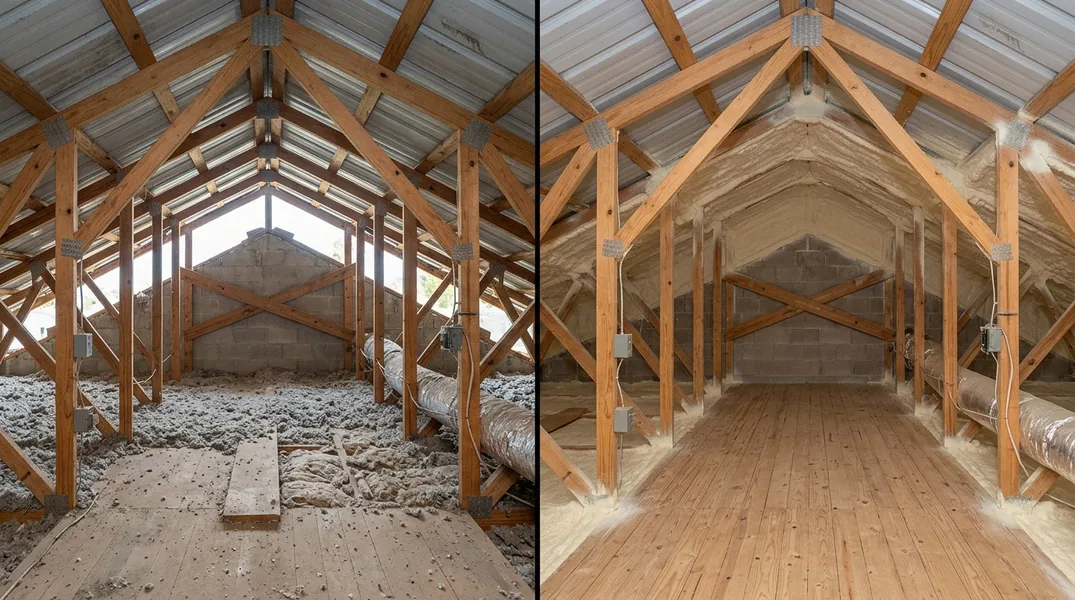
Understanding the Difference: Air Sealing vs. Full Foam Coverage
When it comes to improving your home's energy efficiency, two approaches dominate the conversation: air sealing alone and comprehensive Attic Spray Foam Insulation. Both methods address the fundamental problem that most homes face: conditioned air escaping through gaps, cracks, and poorly insulated spaces. However, they differ significantly in scope, cost, and long-term performance.
Air sealing focuses on identifying and closing the specific pathways where air leaks occur. This might include sealing around electrical outlets, pipe penetrations, ductwork, and the rim joist area. It's a targeted approach that can deliver immediate results and is often the first step homeowners take toward better insulation. Full attic foam insulation, on the other hand, involves applying spray foam throughout the entire attic space to create a continuous thermal and air barrier. This comprehensive method addresses not only air leakage but also provides superior insulation value across the entire attic assembly.
Spray Foam Insulation R-Value Per Inch: What the Numbers Mean
Understanding R-value is essential to making an informed decision about your attic insulation. R-value measures thermal resistance, and higher numbers indicate better insulation performance. Closed Cell Spray Foam Insulation typically delivers between 6.0 and 6.5 R-value per inch, making it one of the most efficient insulation materials available. Open Cell Spray Foam Insulation, while slightly less dense, provides approximately 3.5 to 3.8 R-value per inch. For comparison, traditional fiberglass batts offer only 3.2 to 3.8 R-value per inch, and blown cellulose ranges from 3.2 to 3.6 per inch.
In practical terms, this means that closed cell spray foam achieves superior insulation performance with less thickness. If you need an R-30 in your attic, you would require approximately 5 inches of closed cell foam versus 8 to 10 inches of fiberglass batts. This efficiency becomes especially valuable in Port St. Lucie homes, where attic space is often limited due to roof pitch and structural design. The superior R-value per inch also translates to better moisture control and air sealing in a single application, eliminating the need for separate vapor barriers and caulking work.
R-Value Requirements by State: Florida's Standards and Your Home
Florida's building codes specify minimum insulation requirements based on climate zone and application. Port St. Lucie falls within Florida's hot, humid climate zone, which requires different insulation levels than northern states. The current Florida Building Code requires a minimum of R-19 in attics for new construction, though many energy-conscious homeowners and builders exceed this baseline. For existing homes undergoing retrofits or upgrades, meeting or exceeding R-30 in the attic is considered best practice and can significantly reduce cooling costs.
It's important to note that these are minimum standards, not optimization targets. Many homes in Florida benefit from R-38 to R-49 in attics, particularly if they're older structures with poor existing insulation or if the homeowner prioritizes maximum energy savings. The humid subtropical climate of Florida means that air conditioning costs dominate energy bills, making superior attic insulation one of the most cost-effective upgrades available. When you apply spray foam insulation, you're not just meeting code; you're creating a thermal envelope that performs year-round, reducing both cooling loads in summer and any heating needs in winter.
How Thick Should Spray Foam Be: Finding the Right Balance
The ideal thickness of spray foam depends on your target R-value, the type of foam you choose, and your specific energy goals. For most residential applications in Florida, closed cell spray foam thickness ranges from 4 to 6 inches, delivering R-24 to R-39. Open cell foam typically requires 5 to 8 inches to achieve comparable R-values. The key is matching thickness to your home's existing conditions and your desired performance level.
Many homeowners wonder if thicker is always better. The answer is nuanced. While increasing thickness does improve thermal performance, diminishing returns kick in after a certain point. In Florida's climate, where cooling is the primary concern, 5 to 6 inches of closed cell foam often represents the sweet spot between performance, cost, and practical installation. Thicker applications become necessary if you're retrofitting an older home with minimal existing insulation or if you're targeting exceptional energy efficiency. The best approach is to have a professional assessment of your current attic condition, heat loss patterns, and energy goals. Port St. Lucie Spray Foam Insulation can evaluate your home and recommend the optimal thickness for your specific situation.
Attic Spray Foam Insulation Cost in Port St. Lucie: What to Budget
Cost is naturally a primary consideration for any home improvement project. Spray foam insulation typically ranges from $1.50 to $2.50 per board foot for closed cell foam and $0.50 to $1.25 per board foot for open cell foam. For a typical 1,200 square foot attic, a full closed cell foam application might cost between $3,000 and $5,000, while open cell would range from $1,500 to $3,000. These figures vary based on attic accessibility, existing insulation that needs removal, and local labor rates.
While these upfront costs may seem substantial compared to traditional insulation, the return on investment is compelling. Homeowners typically see energy bill reductions of 15 to 30 percent after spray foam installation, meaning the investment often pays for itself within 5 to 8 years. Beyond the financial payback, you'll enjoy improved comfort, better moisture control, and reduced HVAC strain. To get an accurate estimate for your specific home, contact Port St. Lucie Spray Foam Insulation at (772) 877-0850 or request a free estimate. Our team will assess your attic, discuss your energy goals, and provide transparent pricing tailored to your needs.
Tax Credits and Rebates: Making Your Upgrade More Affordable
The federal government and many state programs recognize the importance of home energy efficiency and offer financial incentives to homeowners who upgrade their insulation. The federal Home Energy Rebate Program provides rebates for qualifying insulation improvements, and Florida-specific programs may offer additional savings. An insulation tax credit may be available depending on the year of installation and your specific circumstances, though these credits have varied over time.
Before starting your project, research current federal and state incentive programs. Many utility companies in the Port St. Lucie area also offer energy efficiency rebates when you upgrade your attic insulation. These rebates can reduce your net cost by 10 to 30 percent, making spray foam insulation significantly more accessible. Port St. Lucie Spray Foam Insulation stays current on available programs and can discuss potential rebates during your consultation. Our team helps you navigate the paperwork and documentation needed to claim available incentives, ensuring you maximize your savings.
Making Your Decision: Which Solution is Right for Your Home?
Choosing between air sealing alone and full attic spray foam insulation requires honest assessment of your home's current condition and your energy goals. If your attic already has adequate traditional insulation and your primary concern is air leakage around specific penetrations, strategic air sealing might be sufficient. However, if your attic insulation is thin, compressed, or unevenly distributed, or if you want maximum energy savings and comfort, full spray foam application delivers superior results.
The reality for most Port St. Lucie homes is that full attic spray foam insulation represents the best long-term investment. It addresses both air sealing and thermal resistance simultaneously, requires no future maintenance, and provides consistent performance for decades. Combined with available tax credits and rebates, the true cost of ownership becomes quite reasonable. To discuss your specific situation and explore whether Attic Spray Foam Insulation is right for your home, contact Port St. Lucie Spray Foam Insulation today at (772) 877-0850 or request a free estimate. Our experienced team will answer your questions, explain your options, and help you make the choice that delivers the best comfort and savings for your home.
Looking for a professional spray foam insulation contractor in Port St. Lucie? Port St. Lucie Spray Foam Insulation responds fast for all your spray foam insulation needs.
Get a Free Quote