Why Concrete Block Homes in Port St. Lucie Need Better Insulation
Port St. Lucie's original grid neighborhoods are characterized by solid concrete block construction, a building method that became popular in Florida during the mid-20th century. These homes are durable and weather-resistant, but they present a unique challenge when it comes to thermal comfort and energy efficiency. Concrete is a thermal conductor, meaning it readily transfers heat from the outside environment into your living spaces, making air conditioning costs skyrocket during our long, hot summers.
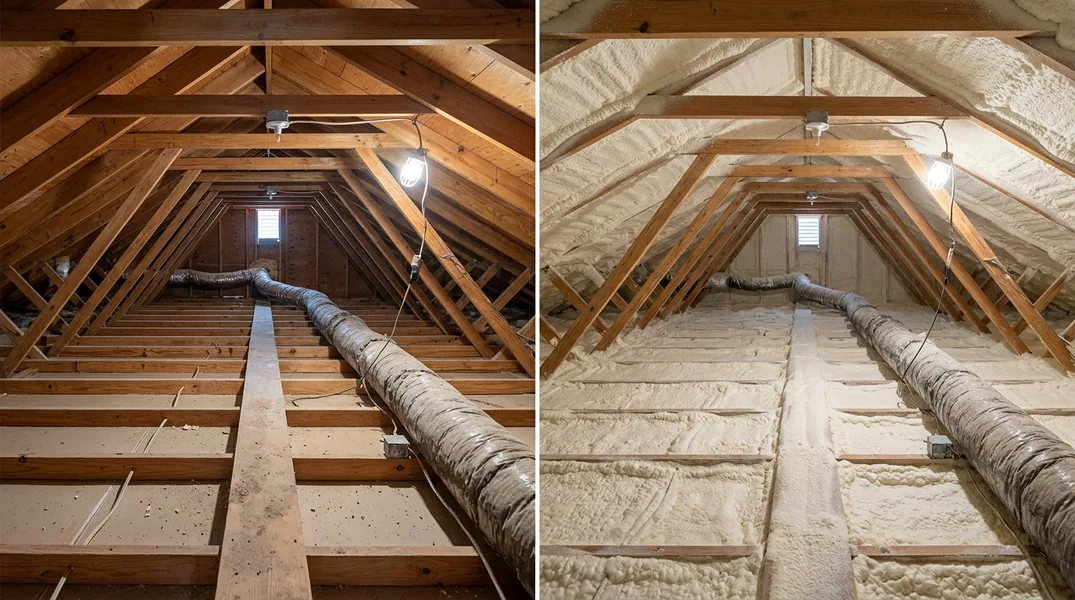
Traditional fiberglass batts and blown-in cellulose insulation were never designed to address the specific thermal bridging problems that concrete block construction creates. When you add the coastal humidity and salt air that many Port St. Lucie homeowners contend with, the case for modern insulation solutions becomes even stronger. Attic Spray Foam Insulation addresses these challenges by creating a continuous thermal barrier that seals air leaks and reduces the workload on your HVAC system year-round.
Is Spray Foam Insulation Worth It for Your Concrete Block Home
The question of whether spray foam insulation is worth the investment depends on several factors specific to your property and energy goals. For homeowners in concrete block homes across Port St. Lucie, the answer is often yes, particularly when you consider the long-term savings and comfort improvements. Spray foam insulation delivers an R-value that's significantly higher than traditional materials per inch of thickness, which means you get better thermal performance without sacrificing attic space or wall cavities.
Energy savings typically range from 15 to 30 percent on heating and cooling costs, depending on your home's current condition, local climate patterns, and how well your HVAC system was sized. Beyond energy bills, spray foam prevents moisture infiltration, reduces pest entry points, and minimizes the strain on your air conditioning system. For homes built on the original grid in Port St. Lucie, where many structures are 50 or more years old, upgrading to spray foam insulation often pays for itself within 5 to 7 years through reduced utility costs alone. When you factor in increased comfort, fewer temperature fluctuations, and protection against mold and pests, the value proposition becomes even more compelling.
Is Spray Foam Insulation Safe: What Every Port St. Lucie Homeowner Should Know
Safety concerns around spray foam insulation are legitimate questions that deserve clear, honest answers. The primary safety consideration involves the chemicals used during installation and the off-gassing process that occurs immediately after application. Both Closed Cell Spray Foam Insulation and Open Cell Spray Foam Insulation involve polyurethane compounds that release volatile organic compounds (VOCs) during the curing process. However, when installed by certified professionals who follow EPA guidelines and industry best practices, spray foam insulation is safe for residential use.
The key to safety is proper ventilation during and immediately after installation, along with ensuring that spray foam does not come into contact with ignition sources or electrical wiring in ways that could create hazards. Modern spray foam products are formulated to meet strict fire safety codes and do not pose a health risk once fully cured. Your installer should ensure adequate air circulation in your attic or wall cavities and may recommend temporary ventilation or brief occupancy restrictions during the curing period. Port St. Lucie Spray Foam Insulation works with products that meet or exceed all federal safety standards, and our installation team is trained to minimize exposure risks for your family.
Understanding Spray Foam Off-Gassing and Curing Times
Spray foam off-gassing is the process by which volatile organic compounds (VOCs) are released from the foam as it cures and hardens. This is a normal and temporary part of the installation process, not a sign of a defective product or unsafe application. The intensity and duration of off-gassing depend on the type of foam, ambient temperature, humidity levels, and ventilation. In Port St. Lucie's warm, humid climate, curing times are typically faster than in cooler regions, which means off-gassing subsides more quickly.
Most spray foam products reach approximately 80 percent cure within 24 hours and full cure within 7 days, though the exact timeline varies. During the curing period, it's advisable to maintain good ventilation in your attic or the affected area and to limit occupancy if you or family members have respiratory sensitivities. After curing is complete, there is no ongoing off-gassing, and the foam becomes inert and safe. If you have concerns about off-gassing or live in a home with young children, elderly residents, or anyone with respiratory conditions, discuss these concerns with your installer before the project begins. Professional installers can recommend strategies to manage ventilation and timing to ensure your family's comfort and safety throughout the process.
Spray Foam Insulation Pros and Cons: A Balanced Look
Understanding the full picture of spray foam insulation means weighing both significant advantages and legitimate limitations. The pros are substantial: superior R-value per inch, excellent air sealing that eliminates drafts, moisture barrier properties that prevent condensation and mold, pest resistance, and long-term durability that can exceed 80 years. For homeowners with concrete block construction, spray foam also addresses thermal bridging that traditional insulation cannot match. The energy efficiency gains translate directly to lower utility bills, and the comfort improvements are often noticeable within days of installation.
The cons deserve equal consideration. Spray foam insulation typically costs more upfront than fiberglass or cellulose alternatives, though the long-term savings often justify the investment. Installation requires specialized equipment and certified technicians, which limits your options for DIY application. Once installed, spray foam is difficult and expensive to remove or modify, so you need to be confident in your decision before proceeding. Additionally, if the installation is not performed correctly, poor application can lead to incomplete coverage, inadequate curing, or exposure issues. This is why choosing a qualified, experienced installer is critical. Wall & Injection Foam Insulation applications can be particularly tricky in older concrete block homes, requiring careful assessment of wall cavities and moisture conditions before work begins.
Common Spray Foam Insulation Problems and How to Avoid Them
Several spray foam insulation problems can occur if the product is not installed correctly or if the wrong type of foam is chosen for your application. One common issue is incomplete coverage, where gaps or thin spots are left in the insulation layer, reducing overall effectiveness. Another problem is improper expansion, which can occur if humidity levels are too high or if the substrate temperature is outside the recommended range. In coastal environments like Port St. Lucie, moisture management is especially important, as excess humidity can interfere with proper curing and foam expansion.
Off-gassing beyond the normal curing period can indicate installation problems or the use of low-quality materials. Thermal bridging, where heat still conducts through concrete block walls despite foam application, suggests that the foam was not applied thickly enough or that wall cavities were not properly filled. To avoid these problems, work with experienced installers who understand Florida's climate challenges and have a proven track record with concrete block homes. Request references, verify certifications, and ensure your contractor performs a thorough pre-installation assessment of your attic and wall conditions. If you're ready to explore spray foam for your home, contact Port St. Lucie Spray Foam Insulation today for a free estimate or call (772) 877-0850 to discuss your specific needs.
Looking for a professional spray foam insulation contractor in Port St. Lucie? Port St. Lucie Spray Foam Insulation responds fast for all your spray foam insulation needs.
Get a Free Quote