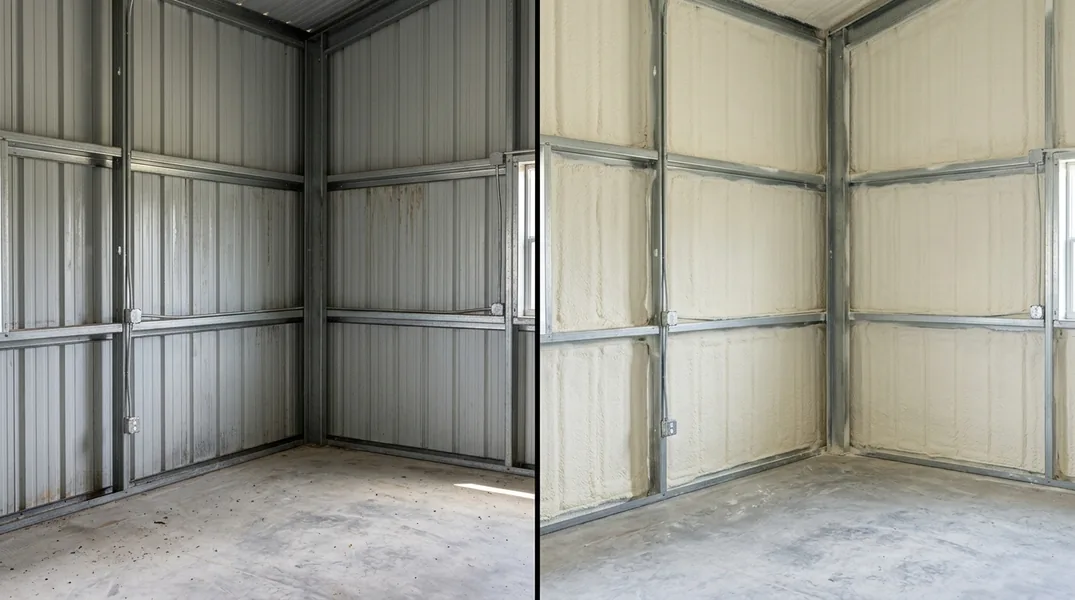
Why 1980s and 1990s Block Homes Need Better Insulation
If you own a concrete block home built during the 1980s or 1990s in the Port St. Lucie area, toward Fort Pierce or Jensen Beach, you're likely dealing with an insulation challenge. Most homes from that era were built with minimal attic insulation, often just fiberglass batts or loose-fill materials that have settled, compressed, or deteriorated over three decades. Concrete block construction is particularly susceptible to thermal bridging, meaning heat transfers directly through the solid walls, making your air conditioning work harder during Florida's brutal summer months.
The tropical climate of South Florida places enormous demands on insulation systems. Your attic temperatures can exceed 150 degrees Fahrenheit on a sunny day, and that heat radiates down into living spaces, forcing your HVAC system to run constantly. Older insulation materials weren't designed to handle this intensity for extended periods, and many homeowners in the region find their energy bills climbing year after year. The good news is that modern Attic Spray Foam Insulation solutions can dramatically improve your home's thermal performance and reduce your cooling costs significantly.
Spray Foam vs Blown In Insulation: Which Performs Better
When comparing spray foam vs blown in insulation, the differences become clear once you understand how each material works. Blown in insulation, typically made from cellulose, fiberglass, or mineral wool, is pneumatically installed into attic cavities. It fills spaces reasonably well but has a critical weakness: it doesn't create an air seal. Air leaks around gaps, penetrations, and irregular surfaces allow conditioned air to escape and hot, humid outside air to infiltrate. In a Port St. Lucie attic where moisture and heat are constant challenges, this lack of air sealing means your cooling system must work harder to compensate.
Spray foam, by contrast, expands as it's applied and creates both insulation and an air barrier simultaneously. This dual function is what makes it superior for older block homes. The foam fills every crevice, seals around electrical wiring, plumbing penetrations, and structural irregularities that blown in materials simply cannot address. When you're dealing with a 1980s or 1990s attic that may have numerous air leaks, the comprehensive sealing capability of spray foam delivers measurable energy savings. Most homeowners report 15 to 30 percent reductions in cooling costs after upgrading to spray foam, a benefit that compounds year after year.
Spray Foam vs Fiberglass: Understanding the Performance Gap
Fiberglass batts were the standard insulation for homes built in the 1980s and 1990s, and they're still common today. However, spray foam vs fiberglass comparison reveals why many homeowners are making the switch. Fiberglass batts have an R-value of approximately 3.2 to 3.8 per inch, while spray foam typically ranges from 3.5 to 7 per inch depending on whether you choose open cell or closed cell varieties. More importantly, fiberglass batts are only effective if they're installed perfectly with no gaps, compression, or settling. After 30 to 40 years in a Florida attic, fiberglass insulation has almost certainly shifted and compressed, losing much of its original effectiveness.
Fiberglass also absorbs and retains moisture, which is a serious problem in humid climates. When moisture gets trapped in fiberglass, it reduces the R-value and can promote mold growth inside the insulation itself. You won't see this problem until it's significant. Spray foam, particularly Closed Cell Spray Foam Insulation, is moisture resistant and actually repels water. This characteristic makes it the best insulation for attic applications in South Florida, where humidity levels are consistently high and moisture infiltration is an ongoing concern.
Spray Foam vs Cellulose: Why Cellulose Falls Short in Florida Climates
Cellulose is often marketed as an eco-friendly blown in insulation option, and while it does contain recycled materials, it has significant limitations in the tropical Florida environment. Cellulose is essentially shredded paper treated with fire retardant chemicals. It settles over time, sometimes losing 20 percent or more of its initial R-value within the first few years. In an attic exposed to extreme heat cycles, this settling accelerates. Additionally, cellulose is highly hygroscopic, meaning it readily absorbs moisture from humid air. Once cellulose becomes damp, it loses insulating value and becomes vulnerable to mold and pest damage.
Spray foam vs cellulose comparisons consistently show that spray foam maintains its performance over decades, while cellulose requires periodic top-ups and replacement. For homeowners in Fort Pierce and Jensen Beach areas with 30 to 40 year old homes, cellulose is essentially a temporary fix that will need attention again in 10 to 15 years. Spray foam is a permanent solution that won't settle, won't absorb moisture, and won't degrade in the way cellulose does. The long-term cost of ownership strongly favors spray foam, even though the upfront investment is higher.
Open Cell vs Closed Cell Spray Foam: Choosing the Right Type for Your Block Home
Open Cell Spray Foam Insulation is less dense and typically has an R-value around 3.5 per inch. It's more affordable and provides good sound dampening, but it's permeable to moisture. For attics in humid climates, open cell is generally not the best choice because it allows moisture to pass through it. Closed Cell Spray Foam Insulation, on the other hand, is denser with an R-value of 6 to 7 per inch and is completely moisture impermeable. It provides superior thermal performance and acts as both an insulation and vapor barrier, which is exactly what you need in a South Florida attic.
For 1980s and 1990s block homes in the Port St. Lucie region, closed cell spray foam is the recommended choice. The higher R-value means you need less thickness to achieve your target insulation level, and the moisture resistance protects your investment for decades. The superior air sealing properties of closed cell foam also provide better performance against the pressure differences created by your air conditioning system. If you're unsure which type is right for your specific home, the team at Port St. Lucie Spray Foam Insulation can evaluate your attic and recommend the best solution.
Attic Spray Foam Insulation Cost in Port St. Lucie: What to Budget
Understanding the pricing for attic spray foam insulation helps you make an informed decision. Spray foam costs more upfront than blown in insulation or fiberglass batts, typically ranging from 1.50 to 3.00 per square foot depending on the type of foam, thickness required, and complexity of your attic layout. For a typical 1,500 square foot attic, you might expect to invest between 2,250 and 4,500 dollars. While this seems substantial compared to blown in insulation at 0.75 to 1.50 per square foot, the long-term value is dramatically different.
The energy savings from spray foam typically pay for itself within 5 to 8 years through reduced cooling costs, and then you enjoy decades of continued savings. Additionally, many homeowners see improved home comfort, better humidity control, and increased property value. When you factor in the durability of spray foam versus the need to replace blown in or cellulose insulation every 10 to 15 years, spray foam becomes the more economical choice. Port St. Lucie Spray Foam Insulation offers competitive pricing and can provide a detailed estimate for your specific project. Contact us at (772) 877-0850 or request a free estimate to learn exactly what your attic upgrade will cost.
Getting Started with Spray Foam Insulation Near Me: Next Steps
If you own a block home from the 1980s or 1990s in the Port St. Lucie, Fort Pierce, or Jensen Beach area and you're tired of high energy bills and poor temperature control, now is the time to upgrade your attic insulation. The first step is to have your current insulation evaluated by a professional. Many attics in homes of this age have settling insulation, moisture problems, or inadequate coverage that's been overlooked for years. A professional inspection can identify these issues and help you understand the scope of the upgrade needed.
Port St. Lucie Spray Foam Insulation specializes in upgrading older homes with modern spray foam solutions. We understand the unique challenges of concrete block construction and Florida's demanding climate. Our team can explain the differences between spray foam vs blown in insulation, spray foam vs fiberglass, and spray foam vs cellulose in the context of your specific home. We'll help you understand why spray foam is the best insulation for attic applications in South Florida and provide a transparent quote for your project. Call (772) 877-0850 today or visit our website to request a free estimate. Don't let another summer pass with an inefficient attic. Let us help you create a more comfortable, energy-efficient home.
Looking for a professional spray foam insulation contractor in Port St. Lucie? Port St. Lucie Spray Foam Insulation responds fast for all your spray foam insulation needs.
Get a Free Quote