Understanding Climate Zone 2A and Why It Matters for Your Attic
If you own a home in Port St. Lucie, you live in what the U.S. Department of Energy classifies as Climate Zone 2A. This designation means your area experiences a hot, humid subtropical climate with significant moisture challenges year-round. Unlike drier climates where traditional insulation materials work adequately, Zone 2A's humidity levels demand a completely different approach to how we insulate your home.
The challenge isn't just about keeping your home cool during our scorching summers or maintaining comfort during mild winters. The real issue is moisture control. When humid air infiltrates your attic or crawl spaces, it can condense on cooler surfaces, leading to mold growth, wood rot, and structural damage that compromises your home's integrity. This is why generic insulation solutions simply don't cut it in Port St. Lucie. Your home needs insulation that acts as both a thermal barrier and a moisture barrier simultaneously.
How Humidity Affects Traditional Insulation Methods
Fiberglass batts and blown-in cellulose insulation, the traditional go-to materials for decades, have a critical weakness in humid climates: they absorb moisture. When these materials soak up humidity from the air, they lose their insulating effectiveness. A fiberglass batt rated at R-19 can drop to R-8 or lower when saturated with moisture. This means you're paying for insulation that doesn't actually insulate, while simultaneously creating an environment where mold and mildew thrive.
The problem compounds when you consider that humid air naturally rises and migrates toward your attic. In Port St. Lucie, where outdoor humidity regularly exceeds 70 percent and indoor humidity can climb even higher without proper ventilation, traditional insulation becomes a liability rather than an asset. Additionally, air leaks around traditional insulation allow moisture-laden air to penetrate deeper into your home's envelope, creating pockets where condensation forms and damage accelerates.
Why Spray Foam Insulation Excels in Humid Climates
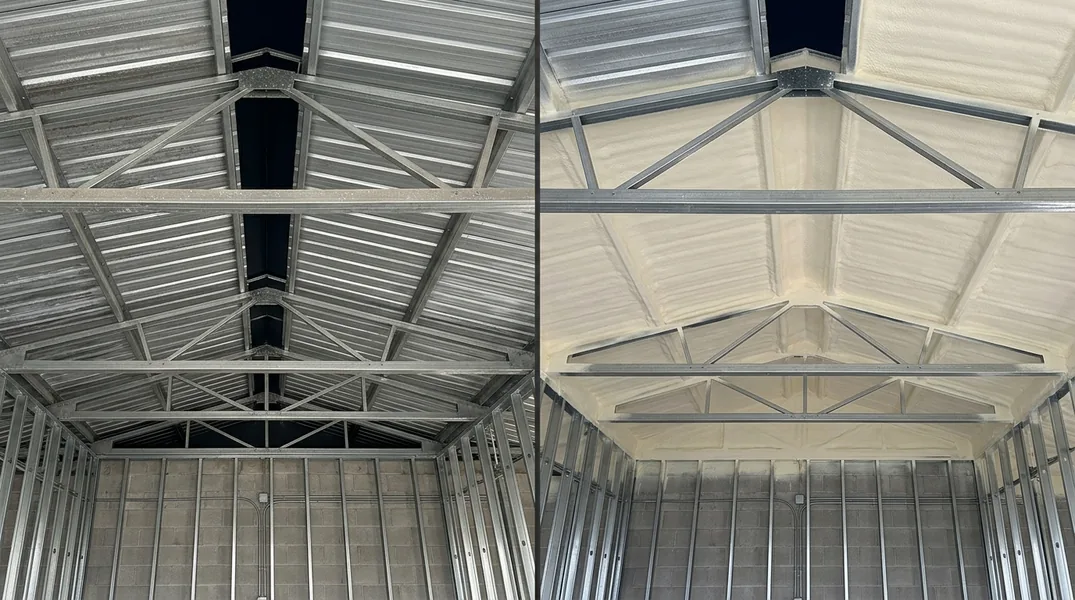
Attic Spray Foam Insulation fundamentally changes the game for homeowners dealing with Zone 2A humidity. Unlike traditional materials, spray foam creates an air-tight seal that prevents moisture-laden air from entering your attic or crawl spaces in the first place. This dual action, insulating while simultaneously air-sealing, is exactly what humid climates require to prevent moisture intrusion and the damage that follows.
Closed Cell Spray Foam Insulation is particularly effective in humid environments because of its dense cellular structure. The closed cells create a vapor barrier that resists moisture penetration, maintaining the material's R-value even in high-humidity conditions. This means your insulation continues performing at its rated efficiency throughout the year, regardless of how humid it gets outside or how much moisture tries to migrate through your walls and into your attic.
Crawl Space Insulation Near Me: Protecting Your Home's Foundation
Many homeowners focus exclusively on their attics and overlook their crawl spaces, yet these areas are equally vulnerable to humidity damage in Climate Zone 2A. If your home sits on piers and beams or has a traditional crawl space, this area is essentially an open door for humid air to enter your home's envelope. Moisture rising from the ground and humid outside air can accumulate in your crawl space, leading to wood rot, mold growth, and cold floors that make your living spaces uncomfortable.
The best insulation for crawl spaces in humid climates is spray foam applied directly to the rim joists and band boards, combined with proper vapor barrier installation on the ground. This approach, known as Jensen Beach and surrounding areas as the gold standard for pier and beam insulation, creates a sealed, conditioned crawl space that prevents moisture infiltration at the source. Open Cell Spray Foam Insulation can also be used in crawl spaces when combined with proper ventilation and dehumidification strategies, though closed cell foam is typically preferred for maximum moisture resistance.
Cold floors are often a symptom of inadequate crawl space insulation and moisture problems. When humid air circulates through your crawl space, it cools as it rises into your living areas, making your floors feel perpetually cold and clammy. Proper crawl space spray foam insulation eliminates this problem by creating a thermal and moisture barrier that keeps conditioned air in your home where it belongs.
The Role of Air Sealing in Humidity Control
One of the most overlooked aspects of insulation in humid climates is air sealing. Even if you install high-quality insulation, air leaks around electrical outlets, ductwork, plumbing penetrations, and rim joists will allow humid air to bypass your insulation entirely. In Climate Zone 2A, these air leaks are particularly problematic because they create pathways for moisture-laden air to reach cold surfaces where condensation forms.
Spray foam insulation addresses this issue inherently because the application process fills every crack, crevice, and gap. When our team applies spray foam to your attic or crawl space, we're not just insulating, we're also sealing every potential air leak. This comprehensive approach prevents the moisture infiltration that plagues homes insulated with traditional materials. Wall & Injection Foam Insulation services offer similar benefits for existing wall cavities where moisture infiltration and air leakage are concerns.
Getting Your Free Estimate for Climate-Appropriate Insulation
If you're concerned about moisture, energy efficiency, or cold floors in your Port St. Lucie home, the first step is understanding your current insulation situation and what needs to change. Port St. Lucie Spray Foam Insulation offers comprehensive evaluations that identify moisture problems, air leaks, and insulation deficiencies specific to your home and our humid climate zone.
Reach out to Port St. Lucie Spray Foam Insulation today at (772) 877-0850 to schedule your free estimate. Our team will assess your attic, crawl space, and other insulation areas to recommend the best solutions for Climate Zone 2A humidity challenges. We'll discuss pricing options and help you understand how proper insulation protects your investment and reduces your energy costs year-round. Don't let humidity damage your home, contact us today and take control of your indoor environment.
Looking for a professional spray foam insulation contractor in Port St. Lucie? Port St. Lucie Spray Foam Insulation responds fast for all your spray foam insulation needs.
Get a Free Quote